Ingredients
Method
- Prepare the courgettes. Trim the ends off your courgettes and slice them into thin ribbons using a vegetable peeler, stopping when you reach the seedy core. You want long, flat ribbons that will mimic the pasta. You should hear a satisfying, clean slice as the peeler runs through the firm flesh. Set the ribbons aside on a clean tea towel to draw out any excess moisture.
- Start the pasta water. Fill a large pot with water, bring it to a rolling boil over high heat, and season it generously with salt until it tastes like the sea. The water should be bubbling fiercely, sending steam billowing up into your kitchen.
- Begin the sauce base. While the water comes to a boil, place a large, deep frying pan over medium-low heat. Add the olive oil and the sliced garlic. Let the garlic gently sizzle for 2-3 minutes; you want it to turn a pale gold and smell nutty and sweet, not sharp or burnt. The moment you catch that first whiff of toasted garlic, you know you're on the right track.
- Cook the pasta. Drop the spaghetti into the boiling water and cook it for 2 minutes less than the packet suggests for al dente. Stir it once so the strands don't stick. The pasta should feel firm and have a distinct white core when you bite into it.
- Wilt the courgette ribbons. Add the courgette ribbons to the garlic oil and toss them gently. Let them cook for just 60-90 seconds, until they soften and turn a vibrant, glossy green. They should begin to release a faint, grassy aroma. Do not overcook them; you want them to retain a little bite.
- Bring it all together. Using tongs, transfer the undercooked pasta directly from the pot into the frying pan with the courgettes, letting a little pasta water cling to it. Add a ladleful (about 100ml) of the starchy pasta water to the pan and increase the heat to medium-high. Toss everything vigorously for 1-2 minutes, until the water and oil emulsify into a creamy, opaque sauce that coats the pasta. The sound should change from a wet splashing to a smooth, slick coating sound.
- Finish the sauce. Remove the pan from the heat. Grate in the lemon zest, squeeze in the lemon juice, and add the butter and grated Parmesan. Toss the pasta again with conviction—the residual heat will melt the cheese and butter into a luscious, silky sauce. The colour will shift to a pale, buttery yellow. Taste a strand of pasta; it should be tender but still offer some resistance.
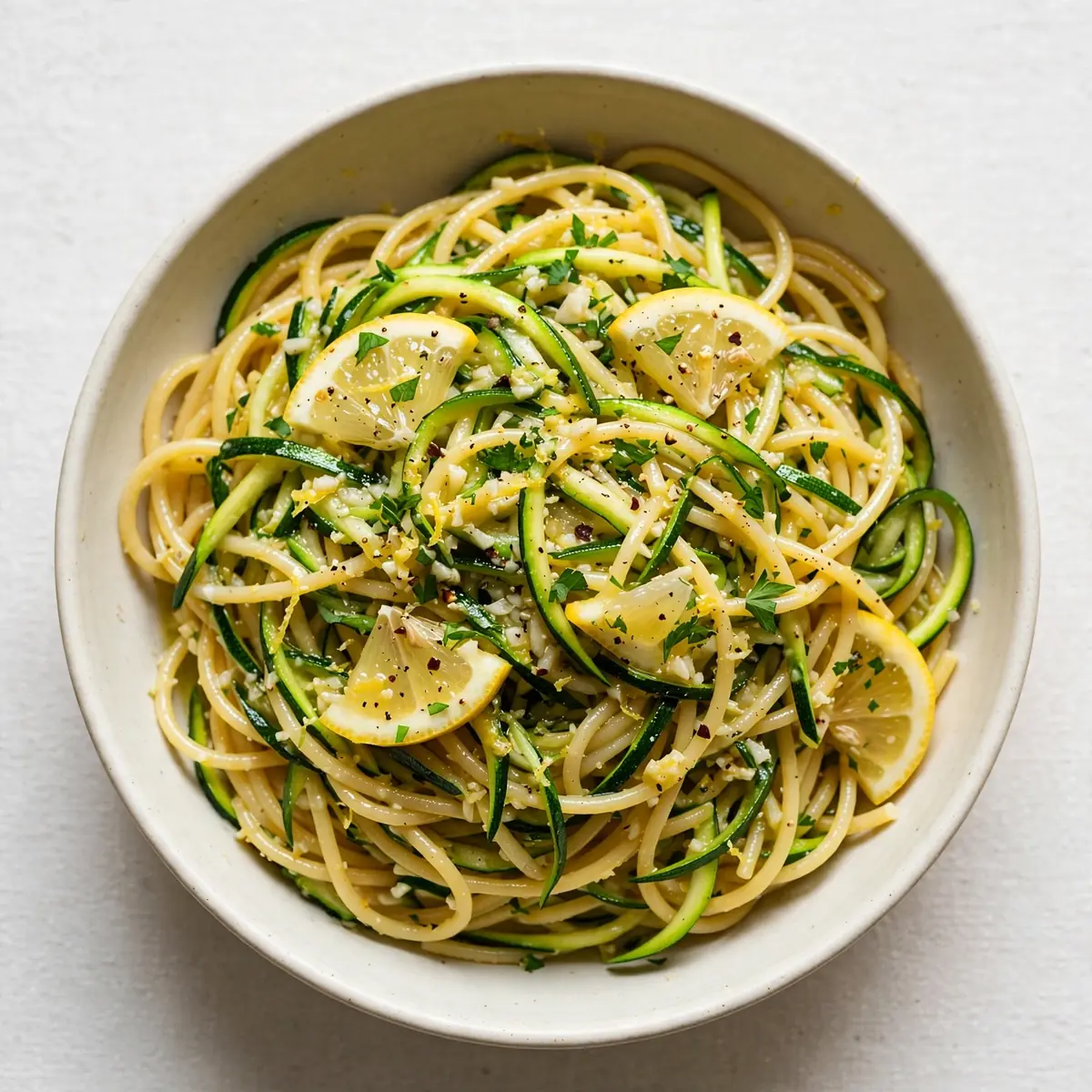
- Serve immediately. Divide the pasta among warm bowls, making sure to get plenty of courgette ribbons and sauce on each plate. Finish with a scattering of torn basil, a crack of black pepper, and a final snowfall of extra Parmesan. The steam rising from the bowl should smell of garlic, lemon, and fresh basil.
Notes
Reserve extra pasta water to adjust sauce consistency if needed. For a vegetarian version, use vegetarian Parmesan.