Ingredients
Method
- Preheat the oven to 200°C (180°C fan). While it heats, halve the cherry tomatoes and arrange them cut-side up on a baking tray lined with parchment. Drizzle with 2 tablespoons of olive oil, scatter the sliced garlic over the top, and season with salt and pepper. The garlic should look pale and fragrant, not burnt.
- Roast the tomatoes for 20-25 minutes. You'll know they're ready when the edges begin to caramelise and wrinkle, and the kitchen smells sweet and intense. The tomatoes should be soft to the touch but still hold their shape — a slight char on the cut edges is exactly what you want.
- Meanwhile, bring a large pot of salted water to a rolling boil. The water should taste like the sea — about 1 tablespoon of salt per 4 litres. Add the cavatappi and cook according to package directions until al dente, usually 9-11 minutes. The pasta should be tender but with a firm bite at the centre.
- Reserve 250ml of pasta water before draining. This starchy liquid is the secret to a silky sauce that clings to every spiral. Drain the pasta and set it aside in the colander, giving it a gentle shake to remove excess water.
- In the same large frying pan or skillet you'll use for the sauce, warm the remaining 2 tablespoons of olive oil over medium heat. The oil should shimmer, not smoke. Add the roasted tomatoes and garlic, scraping up any caramelised bits from the tray — that's pure flavour.
- Reduce the heat to low and stir in the pesto. Watch it as it warms through; the colour will deepen from bright green to a more muted, earthy shade, and the aroma of basil and cheese will fill the air. Add 100ml of the reserved pasta water and stir until the sauce is loose and glossy.
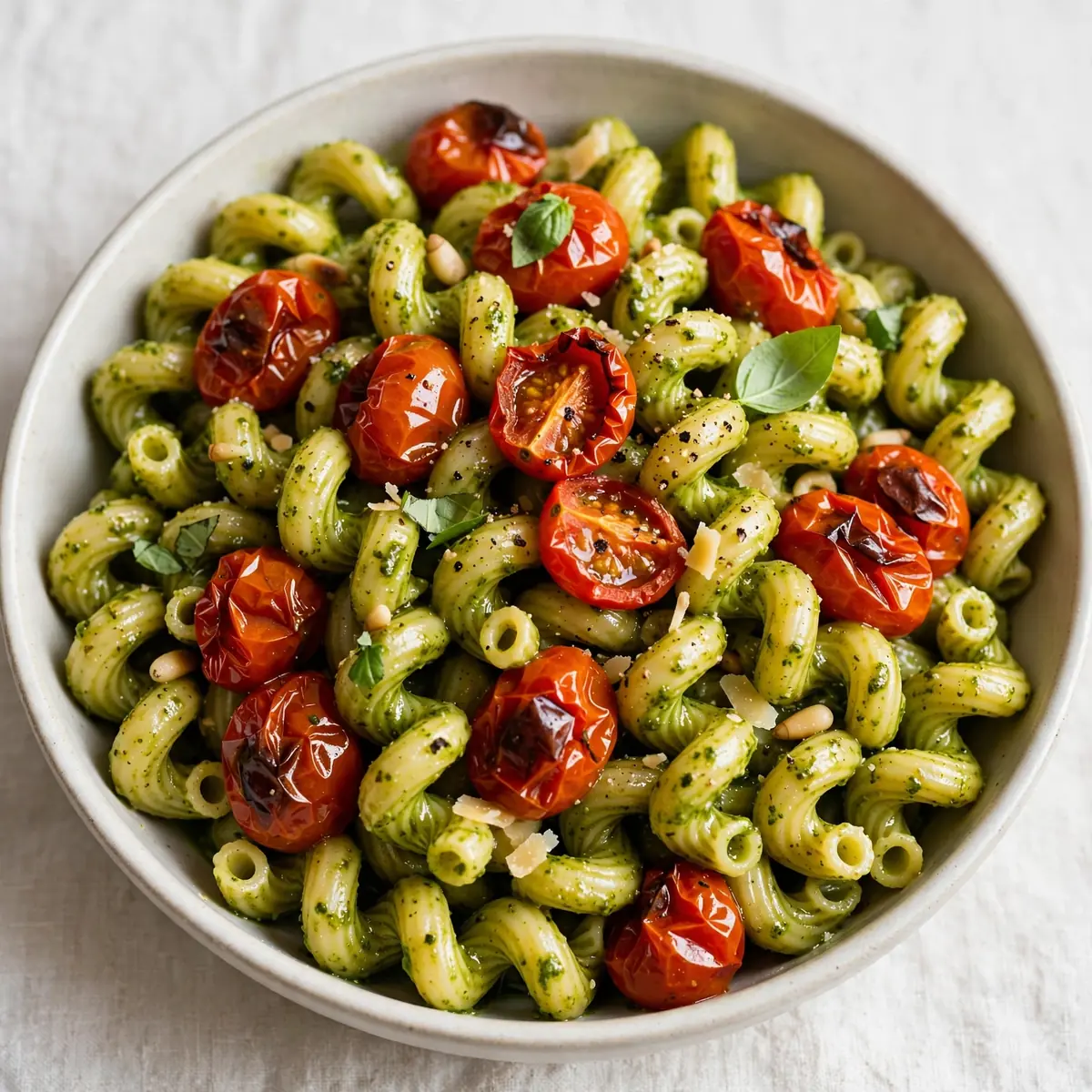
- Add the drained cavatappi to the pan and toss everything together using tongs or a wooden spoon. The pasta should be fully coated in the green sauce, with the roasted tomatoes nestled among the spirals. If the sauce seems too thick, add a splash more pasta water — you're looking for a consistency that coats the pasta without pooling at the bottom of the pan.
- Remove from the heat and stir in the grated Parmesan and lemon juice. The cheese will melt into the sauce, making it even creamier. Taste and adjust seasoning — you may want a pinch more salt or a squeeze of extra lemon to brighten it up.
- Let the pasta rest for 2 minutes before serving. This brief pause allows the flavours to meld and the sauce to settle into the pasta's curves. Garnish with fresh basil leaves and, if using, toasted pine nuts for a little crunch.
Notes
For best results, use good-quality store-bought or homemade pesto. Reserve pasta water to adjust sauce consistency. Toasted pine nuts or walnuts add texture, but are optional.