Ingredients
Method
- Sweat the aromatics: Place your largest, deepest frying pan or a wide pot over a medium heat. Add the olive oil and, once it shimmers and smells warmly of olives, tip in the diced onion. Cook, stirring occasionally, for 6–8 minutes, until the onion is soft, translucent, and looks like pale, golden glass. The kitchen should smell sweet and savoury.
- Add the garlic and tomato purée: Stir in the sliced garlic and the tomato purée. Cook for 1 minute, stirring constantly. The garlic will become fragrant but not browned, and the purée will darken to a deep brick red and smell intensely of cooked tomato.
- Build the sauce base: Pour in the tinned tomatoes, stock, dried oregano, chilli flakes if using, and the sugar. Season with a good pinch of salt and several grinds of black pepper. Stir everything together. The liquid will look a little thin and bright red at this point.
- Add the spaghetti: Break the spaghetti in half and lay it into the pot, pushing it down gently so it is mostly submerged in the liquid. Don't worry if a few ends stick out. Bring the sauce to a gentle, burbling simmer — you should hear soft pops and see lazy bubbles breaking the surface.
- Simmer and stir: Reduce the heat to medium-low. Cover the pot with a lid and let it simmer for 10 minutes. Then remove the lid, and using tongs, stir the pasta thoroughly, separating any strands that have stuck together. The sauce will have thickened slightly, and the pasta will be pale and starting to soften.
- Cook uncovered: Continue cooking uncovered for another 8–12 minutes, stirring every 2 minutes to prevent the pasta from sticking to the bottom. The sauce will reduce and thicken into a rich, rusty-red coating. The pasta should be al dente — tender with a slight bite at the centre. If the sauce looks too dry before the pasta is cooked, add a splash of hot water or extra stock.
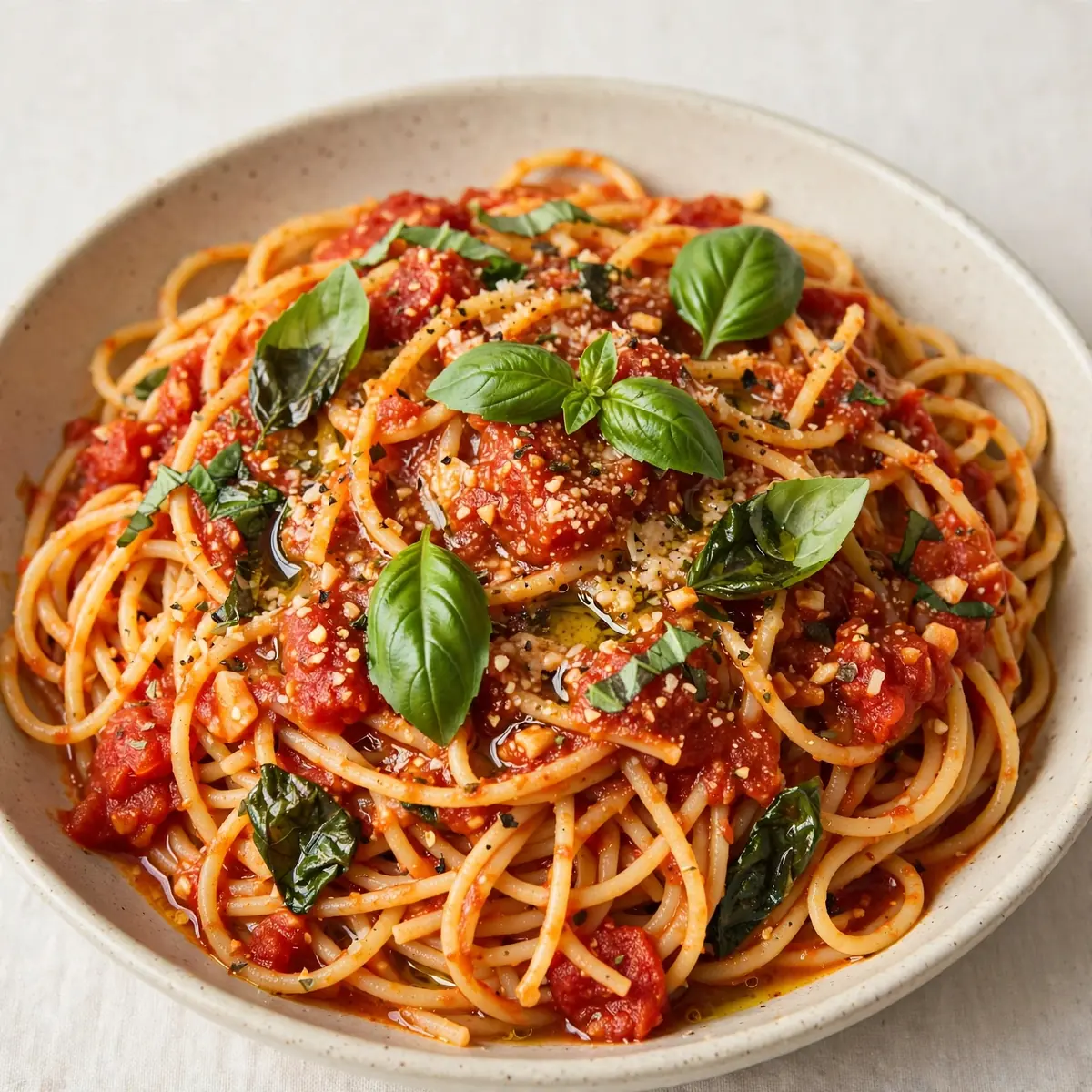
- Finish with basil: Remove the pot from the heat. Tear the fresh basil leaves directly over the pasta and stir them through. The heat will wilt the basil, releasing its sweet, peppery aroma. Taste and adjust the seasoning — you might want a final crack of black pepper or a pinch more salt.
- Serve immediately: Divide the pasta among warm bowls. Top with a generous shower of grated Parmesan and a few extra basil leaves. The sauce should be thick enough to coat each strand without pooling at the bottom of the bowl.
Notes
For best results, use a large, deep pan or wide pot. Break spaghetti in half so it fits submerged in the liquid. Stir frequently to prevent sticking. Add a splash of hot water or extra stock if sauce becomes too dry before pasta is al dente. For a vegetarian version, use vegetable stock and vegetarian hard cheese.