Ingredients
Method
- Bring a large pot of salted water to a rolling boil. Use about a tablespoon of salt per litre — the water should taste as salty as the sea. Drop in your pasta and cook until al dente according to the packet instructions, usually 8–10 minutes for dried. You’ll know it’s ready when the pasta offers a slight resistance against your teeth, and the water looks starchy and milky.
- While the pasta cooks, start the sauce. In a wide, heavy-based frying pan, melt the butter over a medium heat. Listen for the gentle sizzle as the butter foams, then subsides — that’s the signal to add the shallot. Sauté the shallot for 3–4 minutes until it turns translucent and softens, releasing a sweet, mellow aroma.
- Add the sliced garlic to the pan. Stir it through the shallot and cook for just 30 seconds — you want the garlic to become fragrant, but not take on any colour. The moment you catch that warm, pungent scent wafting up, it’s done. Burnt garlic turns bitter, so stay attentive.
- Pour in the double cream and the juice of one lemon. Stir everything together and bring it to a gentle simmer. Let it bubble softly for 2–3 minutes, stirring occasionally. You’ll see the cream thicken slightly and the colour deepen to a pale, buttery gold. The steam will carry a lovely, tangy fragrance that fills the kitchen.
- Reserve a cup of pasta water before draining. Use a ladle or a mug to scoop out about 250ml of the starchy water. Then drain your pasta — do not rinse it, as you want that starch to help bind the sauce.
- Add the drained pasta directly to the pan with the cream sauce. Toss everything together with tongs, adding a splash of the reserved pasta water to loosen the sauce. Watch as the sauce transforms from a thin cream into a glossy, silky coating that clings to each strand. The sound will shift from a slosh to a soft, sticky whisper as the pasta absorbs the liquid.
- Remove the pan from the heat. Now add the grated Parmesan, the zest of both lemons, and the salt and pepper. Toss vigorously — the residual heat will melt the cheese into a velvety emulsion. The sauce should look satiny, not grainy, and the Parmesan will add a nutty, salty depth that balances the lemon.
- Tear the fresh basil leaves into the pan. Use your fingers to rip them roughly — tearing releases more of their essential oils than slicing. Give the pasta one final toss. The basil will wilt slightly into the warm sauce, releasing a sweet, peppery fragrance that is the signature of this dish.
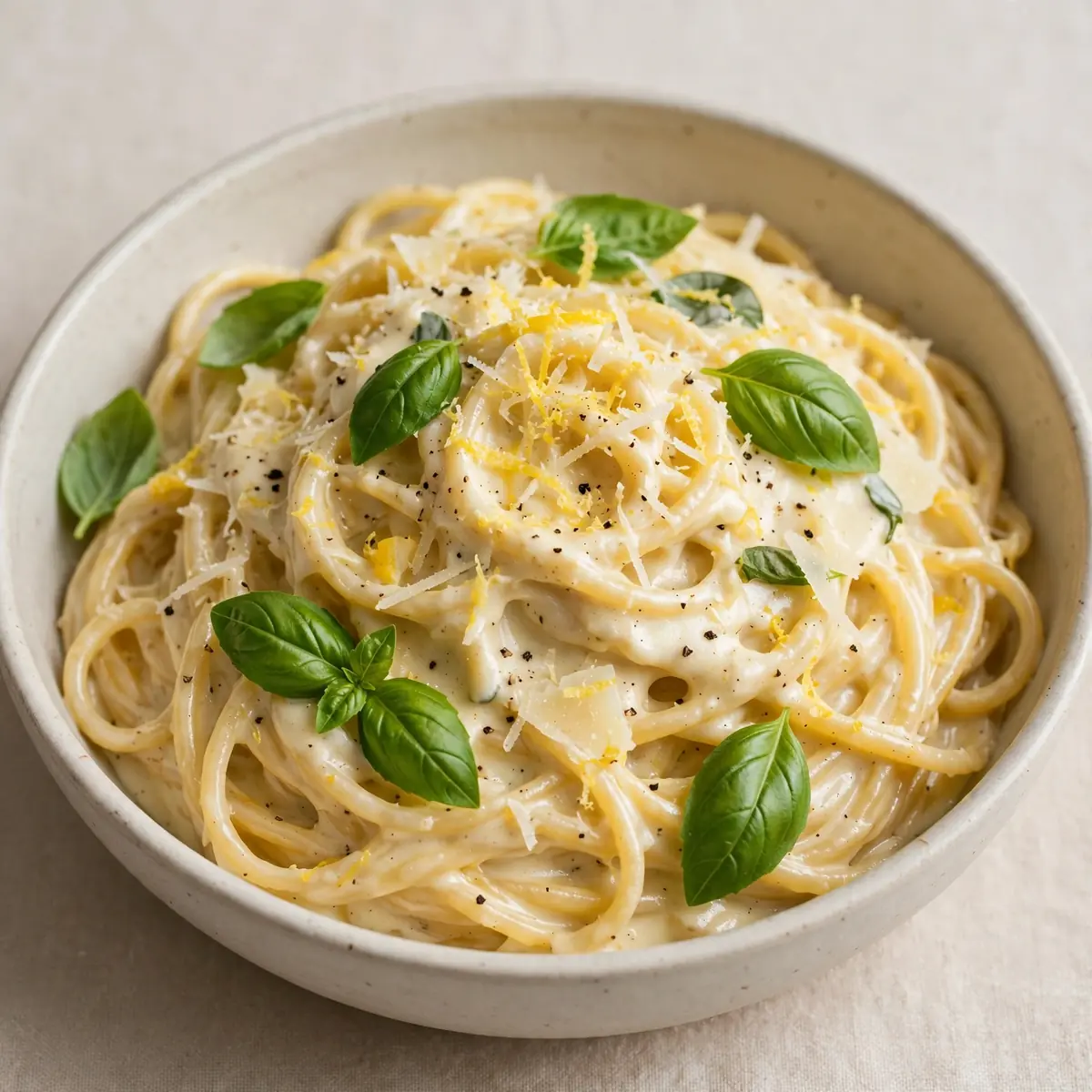
- Serve immediately in warm bowls. Top with an extra scattering of fresh basil leaves and a generous grating of Parmesan. The pasta should be steaming, the sauce glossy, and the basil bright green against the creamy backdrop.
Notes
Reserve plenty of pasta water to adjust sauce consistency. For a vegetarian version, omit the optional chicken or prawns. Use fresh pasta if you prefer a softer bite; adjust cooking time accordingly.