Ingredients
Method
- Build the meat sauce. Heat the olive oil in a large, heavy-bottomed pot over a medium-high flame. When the oil shimmers and smells fragrant, add the diced onions. Cook, stirring occasionally, until they turn translucent and release a sweet, savoury aroma—about 5 minutes. Stir in the grated carrots and chopped celery, and let them soften for another 4 minutes, until the kitchen smells earthy and clean. Add the minced garlic and cook for just 30 seconds, until it becomes fragrant. Now add the minced beef, breaking it apart with a wooden spoon. Cook until the meat browns, losing its pink hue and turning a rich, nutty brown—listen for the satisfying sizzle as the moisture evaporates.
- Simmer the ragu. Once the beef is browned, stir in the tomato purée and cook for a minute, scraping up any browned bits from the bottom of the pan. Pour in the chopped tomatoes and beef stock. Add the oregano and thyme, and season generously with salt and pepper. Bring the sauce to a gentle bubble—you’ll see small, lazy bubbles breaking the surface. Reduce the heat to low, partly cover the pot, and let it simmer for 45 minutes, stirring every so often. The sauce will thicken, turning a deep, brick-red colour, and the aroma will become intensely savoury.
- Prepare the béchamel and ricotta layer. While the sauce simmers, make the béchamel. Melt the butter in a medium saucepan over medium heat. When it foams and smells nutty, whisk in the flour. Cook this roux for 1-2 minutes, stirring constantly, until it turns a pale golden colour and smells like baked pastry. Slowly pour in the milk, whisking vigorously to prevent lumps. Continue whisking until the sauce thickens and coats the back of a spoon—the texture should feel velvety and smooth. Season with a pinch of salt and a grating of nutmeg. In a separate bowl, combine the ricotta, the egg, half the grated Parmesan, and the torn basil. Stir until the mixture is creamy and uniformly pale green.
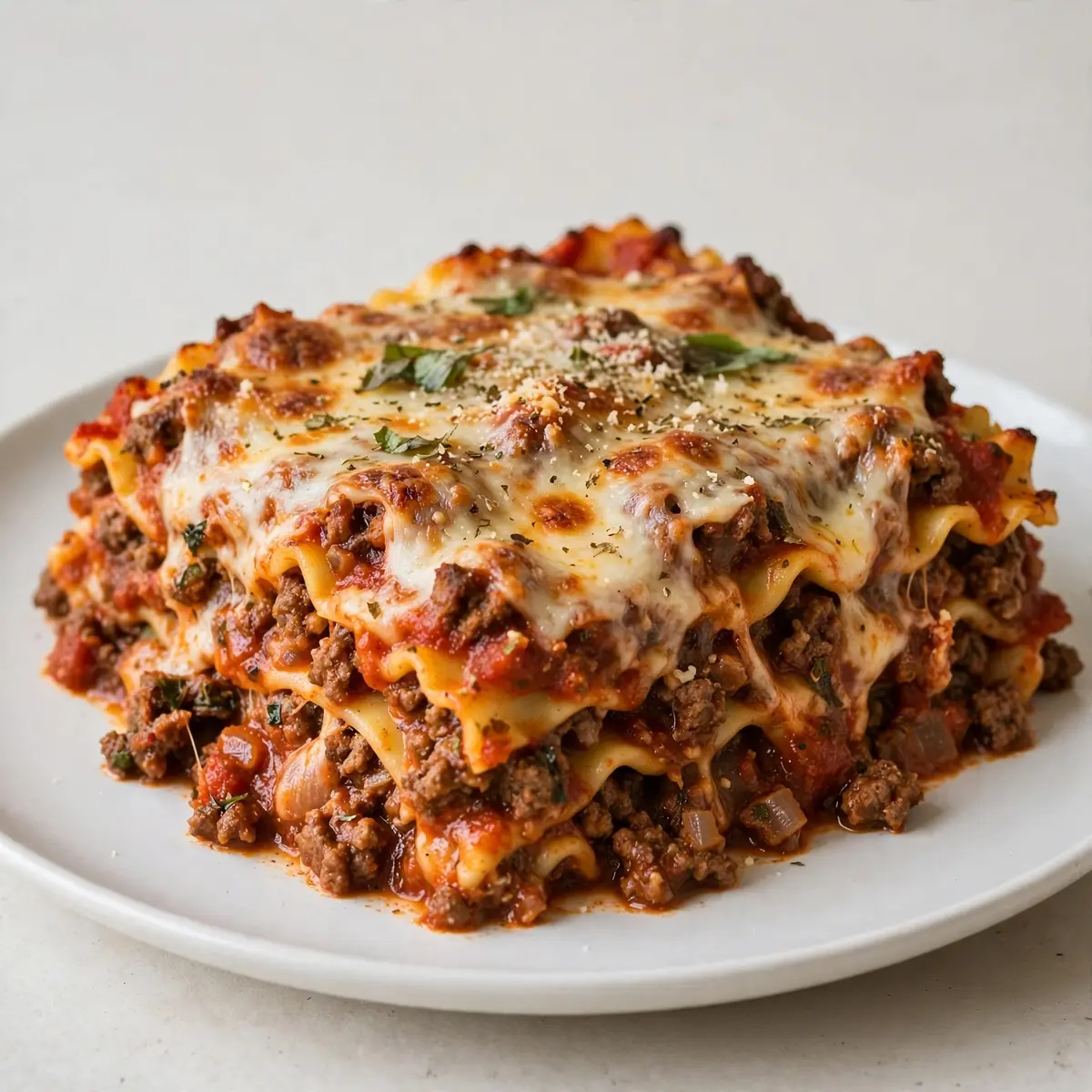
- Assemble the layers. Preheat your oven to 180°C (fan-assisted). Spread a thin layer of the meat sauce across the bottom of a deep, 23x33cm baking dish. This prevents the pasta from sticking. Place a layer of lasagna sheets over the sauce, ensuring they don’t overlap too much. Spread a third of the remaining meat sauce over the pasta, followed by dollops of the ricotta mixture (about a third of it), and then a few slices of mozzarella. Repeat this layering process—pasta, meat sauce, ricotta, mozzarella—two more times. Finish with a final layer of pasta sheets, pour the béchamel sauce evenly over the top, and scatter the remaining Parmesan and any leftover mozzarella slices on top.
- Bake to golden perfection. Place the dish on a baking tray to catch any drips, and bake on the middle rack for 40 minutes. After this time, check the surface—it should be bubbly and lightly golden. If you’d like a deeper colour, turn the oven to 200°C and bake for another 5-10 minutes, until the top is a deep, glossy bronze and the edges are bubbling enthusiastically. You’ll hear the sauce gently popping as it bakes.
- Rest before serving. This step is crucial. Remove the lasagna from the oven and let it rest on the counter for at least 15 minutes. You’ll see the steam rising and then slowly subsiding. The lasagna will settle, making it far easier to slice into clean, beautiful portions. The waiting is the hardest part, but it’s absolutely worth it.
Notes
Let the lasagna rest for at least 15 minutes after baking for clean slices. No-boil lasagna sheets work best. Nutrition values are approximate and per serving.